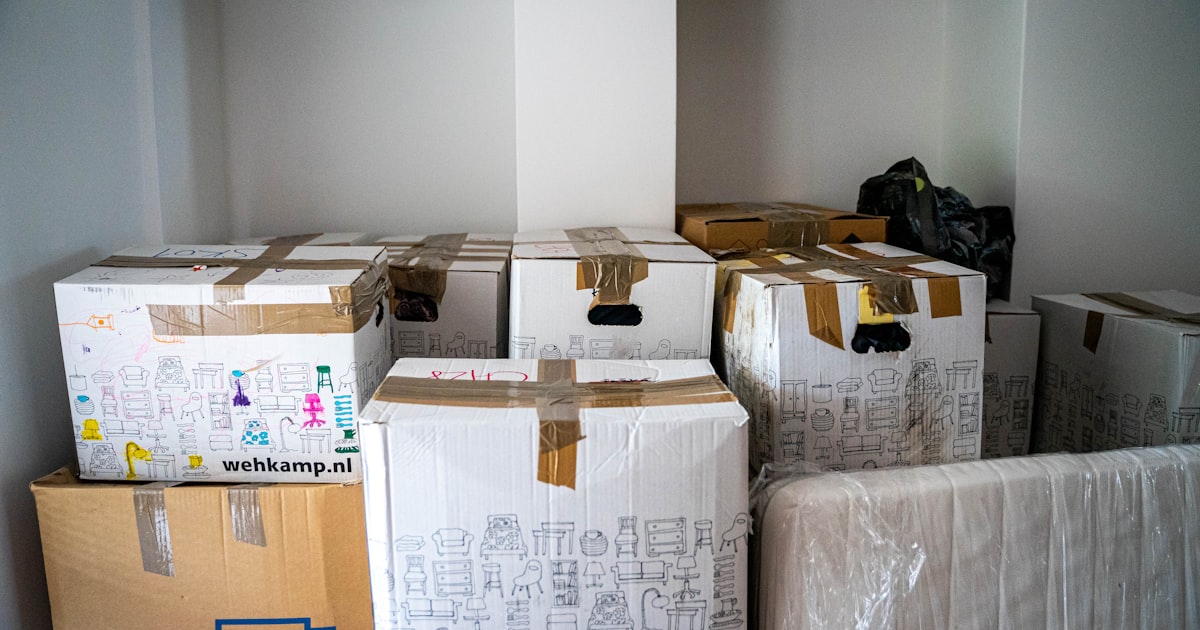
The order matters more than the ritual. Check the building and the land before you sign anything, because that is the only part you can still change. Then time the move, clear the space, and set it up in a deliberate order. A house with a good position and no ceremony beats a badly sited house with a perfect moving day.
Almost every feng shui moving guide starts at the box-packing stage. By then the important decision has already been made. So this one starts one step earlier, at the listing.
What to check on a listing before you make an offer
You are about to commit years of your life and most of your money to a specific point on a map. Everything inside the house can be changed. The things outside it cannot. That is the whole argument for looking at the surroundings first and the kitchen second.
Here is what to look at, with the actual thresholds rather than vague warnings.
The road that points at the front. If the house sits at the top of a T-junction with a road running straight at the entrance, that matters within roughly 50 metres. Past about 50 metres the headlights and the noise fall off enough that ordinary planting handles it. Inside 50 metres it is worth pricing a cure before you offer.
A highway, arterial road or rail line. Look at the distance and at whether anything solid stands in between. Under about 100 metres with a clear line of sight is a real problem. Under 100 metres with a sound wall, a treed reserve or another row of houses in the way is a much smaller one. The barrier counts for more than the raw distance.
Ground that falls away behind the house. In the traditional framing you want support behind and openness in front. A block that slopes down at the rear, so the house sits on the edge of a drop, is the harder case and it is expensive to fix because the fix is landscaping and retaining. A block that rises behind and falls gently to the street in front is the good one, and it is common enough that you can hold out for it.
The house sitting lower than the road. If you step down from the footpath to the front door, water and traffic noise both run toward you. A drop of more than about half a metre is worth noticing. This is also a practical drainage question, so it is one of the rare feng shui checks a building inspector will happen to agree with.
High-voltage transmission lines and towers. Directly overhead or on the boundary is a hard pass for most buyers regardless of feng shui, and resale confirms it. A line two or three streets away is background.
Cemeteries, hospitals, funeral homes. Line of sight matters more than distance here. A cemetery 120 metres away behind a treed boundary you never see is very different from one 300 metres away that you look straight at from the front steps. Stand at the front door and look at what you can actually see.
The facing direction. This is the one nobody checks, and it is the one that decides which of the year charts land on which side of the building. It is also the only item on this list you cannot eyeball from the kerb with any accuracy, because a phone compass held near a steel door frame can read fifteen or twenty degrees out.
Here is that list applied to one real listing. A single-storey brick house on the north side of a quiet east-west residential street. The road runs at 88 degrees, so the perpendicular from the building out to the street points at 178 degrees, which puts the front in the south sector. It sits 40 metres from a T-junction stem, which is inside the threshold, so that needs a cure. The land rises about a metre and a half behind the rear fence, which is the supported position you want. The front door is level with the footpath, not below it. There is a cemetery boundary 180 metres to the northwest, screened by two rows of mature trees and not visible from anywhere on the block.
Read as a whole, that is a good buy with one item to fix, and the fix is a hedge. The important part is that all five of those readings came from the address, before anyone walked through the front door.
You can get the facing direction for any address you are considering with the house facing direction finder. It is free, it works on a listing you do not own yet, and it takes the address straight from the ad.
The cure for a road pointed at your new front door
Since the worked example above turned one up, here is what to actually do about it. The traditional term is a rushing arrow. In plain terms you have traffic, light and noise arriving at your entrance instead of running past it.
- Best: break the line of sight with something solid and living. A dense hedge or a pair of substantial shrubs set forward of the door, tall enough to interrupt headlight height, which means about 1.4 metres. Roughly $200 to $800 depending on how mature you buy the plants. Do this in the first month, because it is the one cure that gets better every year on its own.
- Next best: a low masonry wall or a raised planter across the approach, offset so the path bends rather than running straight in. Roughly $800 to $3,000.
- Backup: a convex mirror or reflective plaque above the door frame, facing out. Under $50. It is the traditional cure and it does nothing about the noise, so treat it as the renter option or the placeholder while the hedge grows.
The costs above are rough US figures for planning, not quotes. They vary a lot by region and by contractor, so get a local price before you budget on any of them.
Timing your move in 2026
Two dates set the frame. The Chinese solar year turns on February 4, not January 1, so the current chart runs from February 4, 2026 to February 3, 2027. Everything below sits inside that window.
Months to avoid. Ghost Month, the seventh lunar month, falls roughly from late August to mid-September in 2026 and is traditionally avoided for moving, signing and starting things. The weeks around Qing Ming in early April are treated as reflective rather than forward-moving, so they are second choice rather than a hard no.
Months that are generally favorable. The second, third, sixth, ninth and twelfth lunar months. For a specific date rather than a month, a Chinese almanac lists auspicious days and reads them against your own birth chart.
What to do when the settlement date is not yours to pick. This is most people. If your date lands in an unfavorable window, the traditional workaround is to move a small first load on a favorable day, so the household is considered to have begun there, then move the bulk whenever the truck is booked. What is not worth doing is spending two years worried about the date. A well-sited house on a bad day beats the reverse, every time.
Before you move anything in
Clean it out completely. Every surface, before a single box arrives. Part of this is hygiene and part of it is the older idea that you are clearing what the previous occupants left. If the house is brand new, cleaning still clears construction dust and the flatness that comes from a place sitting empty.
Open it up for two or three days. Windows and doors, as long as you can manage. Stagnant air is the physical version of stagnant energy, and unlike most of this category, you can smell the difference. Even a few hours helps.
Walk it through. Sage, palo santo, incense, or whatever you prefer. Start at the front door, move clockwise through the whole house, and finish back at the front door. Versions of this exist in most cultures, so use whichever version you are comfortable with.
Fix the entry lighting now, while the house is empty. A dark entrance is the most common problem in any home and the cheapest thing to fix, and it is far easier to swap a fitting before the furniture arrives. If you cannot read the house number at nine at night, it is too dark.
Moving day, in order
Pillows go in first. New ones if you are buying them anyway, clean existing ones if not. In the tradition they carry the household's rest into the new place. It costs nothing and it takes ten seconds.
Carry in a container of rice, about 80 percent full, with a red envelope on top. This is the abundance gesture, and the container that stays not-quite-full is the point.
Turn on every light and open every window when you first arrive. Do this before the truck is unloaded, not after.
Set up the beds before you unpack anything else. Headboard against a solid wall, a clear view of the door from the bed, and the bed not sitting directly in line with the doorway. The reason to do it first is practical as much as anything: it is the one job that gets harder as the room fills with boxes, and your first night in the house starts better for it. There is more on this in where to put your bed.
The first week
Have people over. A housewarming fills a new home with activity, and it works for the ordinary reason that a house feels different once it has held a group of people talking.
Put a healthy plant near the front door. Healthy is the operative word. A struggling plant at the entrance is worse than no plant.
Close the doors at night from the first night. The habits you set in the first week are the habits you keep for years.
Check what the year chart puts on each side of the building. The 2026 chart rotates onto the direction the house faces, which means two identical houses on opposite sides of the same street get different readings. Once you know your facing, you know which sides of the home want activity this year and which want to be left quiet.
Before you unpack, know what you bought
You have an address you do not live at yet, and that is the best possible moment for this. We read the building and the land from above: which direction it faces to the degree, the street it fronts, what the year chart puts on each side of it, and the named parks, schools and roads around it.
Enter the address of the place you are moving to. The first findings are free.
Frequently asked questions
When is the best time to move house in 2026?
Avoid Ghost Month, roughly late August to mid-September 2026, and treat the weeks around Qing Ming in early April as second choice. The second, third, sixth, ninth and twelfth lunar months are generally favorable. For a specific day rather than a month, a Chinese almanac reads dates against your own birth chart.
What should I check in a house before buying it, in feng shui terms?
Look at what you cannot change. A road pointing at the front within about 50 metres, a highway or rail line within about 100 metres with no barrier in between, ground falling away behind the house, a front door sitting below street level, transmission lines on the boundary, and whether you can actually see a cemetery or hospital from the property. Then check which direction the building faces, because that decides how the year charts apply to it.
What should I bring into a new home first?
Pillows, then a container of rice about 80 percent full with a red envelope on top, then set up the beds before unpacking anything else. Turn on all the lights and open the windows as soon as you arrive.
Do I have to cleanse a new home before moving in?
Clean it thoroughly and ventilate it for two or three days, which is the part that does measurable work. The clockwise walk-through with sage or incense is the traditional layer on top, and it is worth doing if it means something to you. Neither one is a substitute for looking at the site before you sign.
Does the 2026 flying star chart apply to a house I just bought?
Yes, and it applies from the date the chart turns rather than the date you moved. The 2026 chart runs from February 4, 2026 to February 3, 2027 and rotates onto your building's facing direction, so it tells you which sides of the home want activity this year and which want quiet. It cannot tell you which room is on which side. Only you know that, because you have the floor plan and we do not.
My settlement date lands in a bad month. Is that a problem?
It is not something to lose sleep over. Move a small first load on a favorable day if the timing allows it, then move the rest when the truck is booked. Location and orientation are fixed for as long as you own the house. The date is one day.